Prior to the 1630’s, we really know next to nothing about the Lawrence family’s actual origins in Great Britain.
The above statement is the bedrock truth on which I’m going to build the family history that follows. It’s a confession of ignorance. It’s not dramatic in any way and, for those who might care about such things – I am not one – it offers nothing in the way of prestige or bragging rights. But…it is good scholarship, and, having written it, I will sleep quite soundly at night.
For the last 150 years or so, there has been a fictitious tale circulating that our family’s first discernible ancestor was a humble Englishman, Robert Lawrence, who, in 1191 AD, as a reward for his services at the siege of Acre, was knighted by Richard the Lionheart (aka Richard I, aka Richard of Anjou). According to this story, Sir Robert Lawrence, after receiving his knighthood, returned home from war, and went on to become the progenitor of the Lawrences of Ashton Hall, and subsequently, the Lawrences of Wisset and Rumburgh, and, by the mid-17th century, the Lawrences of Watertown and Groton, Massachusetts.
The genealogical detective work that exposed this story as being at best unreliable and at worst a complete fabrication was performed in the early 1930s by the distinguished researcher G. Andrews Moriarty. Moriarty summarized his findings in an article appearing in The American Genealogist, titled “Pre-American Ancestries: V. The Lawrence Family of Groton and Boston, Massachusetts” [TAG 10 (Oct 1933): pp. 78 – 83)].
Unfortunately, despite Moriarty’s compelling and definitive debunking of the myth, the tale of Sir Robert Lawrence and the lineage that supposedly derives from him has been difficult to dispel.
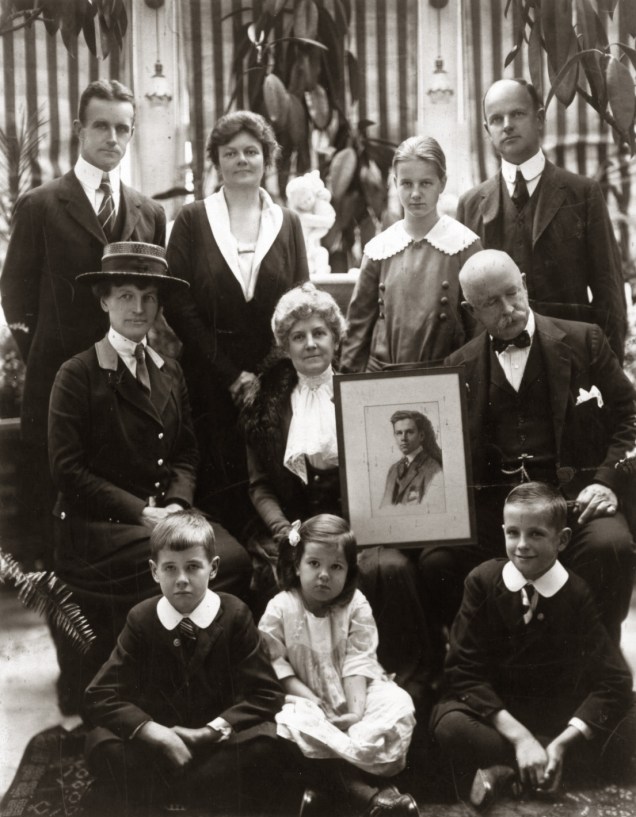
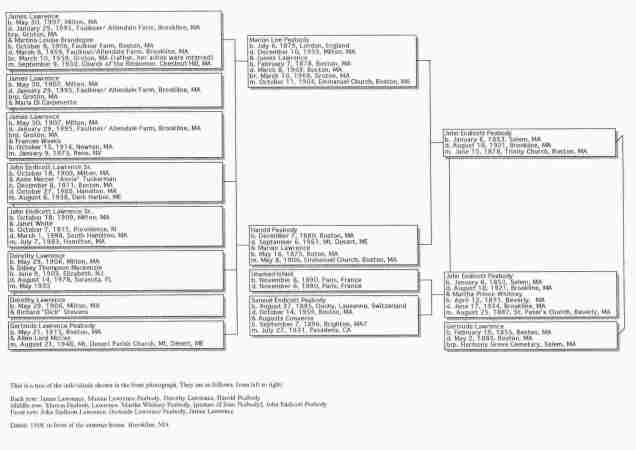
 Kinsmen and Kinswomen