A Tribute to Aunt Mary Morrison’s (née Mary Little Rodgers) Civilian Service, from the Civil War Through WWII

The following appeared in The Quincy Patriot Ledger, July 3, 1945, mere weeks after VE Day, and weeks before VJ Day. It’s an article that describes a woman my own mother (mentioned at the end) knew well, but who as a young teenager had sewn gifts for Union troops fighting under President Lincoln.

I do this work for many reasons, but near the top of the list, I do it because I want to show present and coming generations that the people of the past, recorded as grainy black and white or sepia photos, or as primitive oil portraits, or without images altogether, were as real as you and I.

Reading this, several times over, and imagining myself at her party, listening to her words and seeing her good cheer, I am reminded of Masaccio’s fresco The Holy Trinity in the Basilica of Santa Maria Novella. At the base, below the image of Christ, there is a skeleton, and above it the words: “Io fu’ già quel che voi sete, e quel ch’i’ son voi anco sarete” or “I once was what you are [now], and what I am [now] you will also be.”

Quincy Woman, 95, Has Done Her Share During Four Wars

Mrs. Mary Morrison, Great-Aunt of Former Mayor, Made Comfort Bags For Civil War Soldiers; Still Sews For Red Cross

Seated in her favorite rocking chair, Mrs. Mary L. Morrison, of 84 Bigelow street, who celebrated her 95th birthday over the weekend, looked back on almost a century of “good moderate living” as she told her family how she helped in each of the last four wars, what the town of Quincy was like in 1870, and all about the old Rodgers homestead in Marshfield Hills. Mrs. Morrison is the great-aunt of Clarence R. Burgin, president of the Quincy Savings bank, and Lt. Thomas S. Burgin, USN, four-times Mayor of Quincy.

Continue reading →
Links to Collaborative Genealogy Sites

In the interest of seeing that our family tree, the actual genealogical “who, when, and where” is preserved, I have placed some of the research that went into this blog on five websites, four of which actually aim to piece together, person by person, a single family tree for everyone. Taken literally, that is wildly ambitious, not to mention completely impractical, but the effort alone has already produced, flaws and shortcomings notwithstanding, a very special body of research.

These “collaborative” genealogy sites are Geni, WikiTree, WeRelate, and FamilySearch. Each is a little different.

For example, Geni and WikiTree make room for all relatives including living people and then add privacy controls. WeRelate, meanwhile, has decided to forego information on living people and just focus on the near past. Geni makes little use of sources or documentation, but WikiTree and especially WeRelate strive, with varying success, to back up all assertions with primary documents. There are plenty of other differences, but that’s the gist of it.

The main point is that putting the information here means it will survive even in generations when no one inherits an interest in family history– something I see as increasingly  likely.

Here are some jumping off points, categorized first by site, and then by a few key relatives…


Geni:


WikiTree:


WeRelate:


FamilySearch:


Finally, I said there are five sites. The fifth is Ancestry.com, which somewhat sadly, has a paywall and curious people cannot simply click over to peruse the material at will. You can see it without a financial outlay, but to do so you’ll have to email me or Elisha Lee to be put on a list of invitees. Sorry, I didn’t make up those rules. If you are already on Ancestry, you can search for our tree which is called Kinsmen and Kinswomen (revised and sourced). [18,000 relatives and counting.] On the plus side, looking for a silver lining, the highly commercial aspect of Ancestry has paid huge dividends in making a vast trove of documents available online, including – in most cases – photocopies of originals. This includes birth certificates, marriage entries in the parish register, passport applications, draft registrations, VA records, medical examiners’ notes, high school yearbooks, biographical vignettes, and on and on. People can also share multiple digital copies of rare family photos.  There really is nothing like it for primary research.

At some point in the distant future, I’ll figure out how to put a version of our tree here, on this site, with measures in place to protect people’s privacy, but until then, the organizations above will have to suffice.

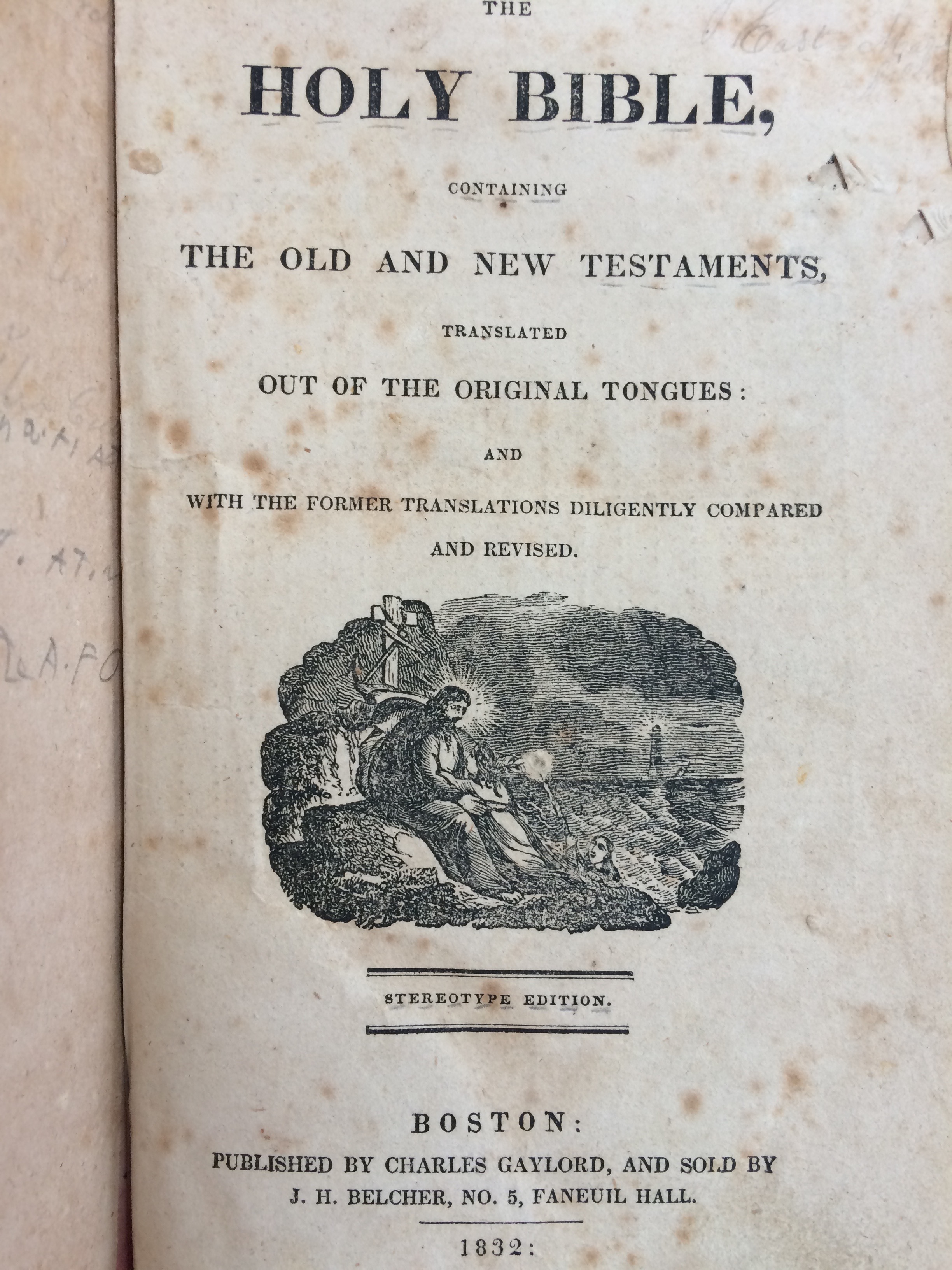
The Rodgers-Clift Family Bible, Found in an Online Auction

This was a recent eBay find. It’s the family bible documenting the early/ mid-19th century births in the Rodgers family.

Evidently after Uncle Tom’s (Thomas Skudder Burgin, brother of my grandfather, C. Rodgers Burgin) death, it was sold off, probably in a box of items, unrecognized for what it was. (Face palm.)

After leaving Massachusetts, it went to a Bible dealer in Indiana, and eventually to a re-seller in Odessa, Texas, who – following its purchase – sent it back to me.

As Paul Simon said, ‘Days of miracle and wonder.’

Home again.


img_0082

Continue reading →