George Ticknor on The Prescott Family

William Hickling Prescott and George Ticknor (1791-1871) were close friends, and as they were both historians, colleagues as well. When Prescott died, Ticknor decided to pay both personal and professional tribute to him by writing his biography.

In the Appendices of the resulting book, Ticknor included a “brief-ish” summary of the Prescott family in America, including both stories of the colonel and stories of the judge.

Here is Appendix A of Ticknor’s Life of William H. Prescott, 1863.


___________


THE Prescott family belong to the original Puritan stock and blood of New England. They came from Lancashire, and about 1640, twenty years only after the first settlement at Plymouth and ten years after that of Boston, were established in Middlesex County, Massachusetts, where not a few of the honored race still remain.

Like most of the earlier emigrants, who left their native homes from conscientious motives, they were men of strongly marked characters, but of small estates, and devoted to mechanical and agricultural pursuits, — circumstances which fitted them as nothing else could so well have done for the trials and labors incident to their settlement in this Western wilderness. But, even among men like these, the Prescotts were distinguished from the first. They enjoyed, to an uncommon degree, the respect of the community which they helped to found, and became at once more or less concerned in the management of the entire Colony of Massachusetts, when those who took part in its affairs bore heavy burdens and led anxious lives.

John, the first emigrant, was a large, able-bodied man, who, after living some time in Watertown, established himself in Lancaster, then on the frontiers of civilization. There he acquired a good estate and defended it bravely from the incursions of the Indians, to whom he made himself formidable by occasionally appearing before them in a helmet and cuirass, which he had brought with him from England, where he was said to have served under Cromwell. His death is placed in 1683.

Continue reading

William Hickling Prescott: A Sketch from 1911

The following biographical sketch appeared in The 1911 Encyclopedia, based on a century-old version of Encyclopedia Brittanica. The original URL is now broken.

_______________________

134

PRESCOTT, WILLIAM HICKLING (1796 – 1859)


American historian, was born in Salem, Massachusetts, on the 4th of May 1796. His grandfather was Colonel William Prescott (1726 -1795), who commanded at the battle of Bunker Hill; and his father was a well-known lawyer. He received his earlier education in his native city, until the removal of his family in 1808 to Boston. He entered Harvard College in the autumn of 1811, but almost at the outset his career was interrupted by an accident which affected the subsequent course of his life. A hard piece of bread, flung at random in the Commons Hall, struck his left eye and destroyed the sight. After graduating honorably in 1814 he entered his fathers office as a student of law; but in January 1815 the uninjured eye showed dangerous symptoms of inflammation. When at last in the autumn he was in condition to travel, it was determined that he should pass the winter at St Michaels and in the spring obtain medical advice in Europe. His visit to the Azores, which was constantly broken by confinement to a darkened room, is chiefly noteworthy from the fact that he there began the mental discipline which enabled him to compose and retain in memory long passages for subsequent dictation; and, apart from the gain in culture, his journey to England, France, and Italy (April 1816 to July 1817) was scarcely satisfactory. The verdict of the physicians was that the injured eye was hopelessly paralysed, and that the preservation of the sight of the other depended upon the maintenance of his general health. His further pursuit of the legal profession seemed to be out of the question, and on his return to Boston he remained quietly at home. On 4th May 1820 he was married to Miss Susan Amory. Prior to his marriage he had made a few experiments in composition, but he now finally decided to devote his life to literature. A review of Byron’s Letters on Pope in 1821 constituted his first contribution to the North American Review, to which he continued for many years to send the results of his slighter researches. He next turned to French literature, and to the early English drama and ballad literature. Of the direction and quality of his thought at this time he has left indications in his papers on Essay-Writing (1822) and on French and English Tragedy (1823). In pursuance of his method of successive studies he began in 1823 the study of Italian literature, passing over German as demanding more labor than he could afford. In the following year he made his first acquaintance with the literature of Spain under the influence of his friend and biographer, Ticknor; and, while its attractiveness proved greater than he had at the outset anticipated, the comparative novelty of the subject as a fie]d for research served as an additional stimulus.

Continue reading

Castle Freeman’s Portrait of William Hickling Prescott

The following biographical sketch by Castle Freeman appeared in HARVARD magazine, in 1996, and is a very nice, almost conversational, immensely readable introduction to this man. (Used here by kind permission of the author.)


135


__________________

Best remembered as the author of The Conquest of Mexico, W.H. Prescott was the preeminent American historian in an age when works of history took up more space in the literary world than they do today. The son of a well-to-do lawyer prominent in civic affairs, whose own father was one of the heroes of the Battle of Bunker Hill, Prescott received the expected Greek and Latin schooling as a boy and entered Harvard at 15.

It was at Harvard that Prescott suffered the injury that did so much to shape his life and work. He was hit in the left eye by a piece of hard bread during a food fight. Eventually the other eye was also affected. For the rest of his life, his weak and painful vision meant that he could seldom read for more than a couple of hours a day and couldn’t see to write. A part of his fame has had to do with the notion that Prescott was a blind genius, conjuring in utter darkness the vivid scenes of his great histories. In fact he was never completely blind, but the obstacle to his chosen work was not much less than total blindness would have been.

Continue reading

An Introduction to William H. Prescott

The grandson of Col. William Prescott, like his father – also William – but now with a middle initial H, for Hickling after his maternal grandfather Thomas Hickling. [See my posts here, here, and here.] He was subsequently known simply as “William Prescott, the historian.”

The Massachusetts Historical Society has a very good, very concise, biographical overview of William H. Prescott. They based it on the massive work by Prescott’s friend, George Tichnor, Prescott’s Life, 1864.


126

William Hickling Prescott

____________

The URL for this short essay is: http://www.masshist.org/collection-guides/view/fa0222

William Hickling Prescott was an historian and author distinguished for his writings about the rise and fall of the Spanish Empire. His most well-known books include The History of the Reign of Ferdinand and Isabella the Catholic (1837), History of the Conquest of Mexico (1843), History of the Conquest of Peru (1847), and his unfinished History of the Reign of Philip the Second (Vol. I and II, 1855; Vol. III, 1858). Prescott’s histories received critical and popular success during his lifetime, and today, although outdated, they are still widely known and read in the historical community.


Continue reading

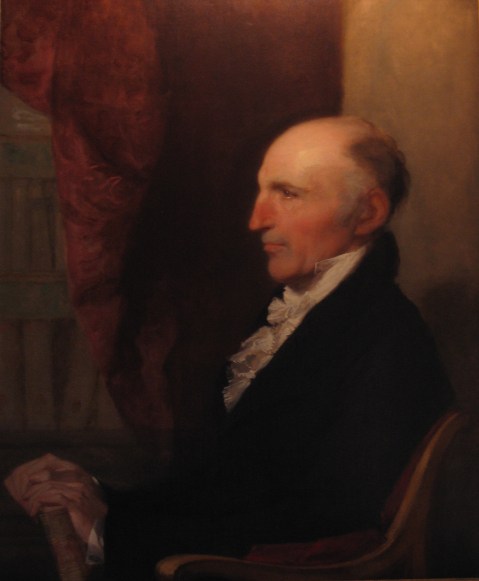
Hon. William Prescott

The son of Col. William Prescott, also William, was known during his life, which was devoted to the law, as Hon. William Prescott. Here is a brief biography.


hon-wm-prescott-by-gilbert-stuart-alt1

Hon. William Prescott, painted by Gilbert Stuart

_______________

from the Prescott Memorial, pp.75-76.


Hon. William b. at Pepperell, Aug. 19, 1762. In 1776, at the age of fourteen, he was placed under the instruction of “Master Moody,” the then celebrated teacher of Dummer Academy in Newbury, Essex Co., Mass. Here he remained three years, when he entered Harvard College, where he graduated in 1783, with high honors. His father, partaking largely of that liberality so common among the officers of the Revolutionary army, had accumulated hut a small estate, and young Mr. Prescott found it necessary to be earning something to help him finish his professional education, upon which he was about to enter; accordingly he took charge of an academy at Beverly, where he continued two years, and where he studied his procession, (that of law,) with the Hon. Nathan Dane, an able and learned jurist and statesman. While here he received an invitation to become a member of Gen. Washington’s household, to act as a private teacher while he was prosecuting his legal studies, but. previous engagements compelled him to decline the proffered boon, and his classmate in college, Mr. Tobias Lear, obtained it.

Continue reading

The Founding of Lawrence, MA

I found the following in a book on the history of textiles, and as per Uncle Johnny’s [John Endicott Lawrence, Sr.] feeling that this was “an event that merits close scrutiny,” I have enclosed here the first part of that account.


14310293_252957791765730_1056963093565015176_o

Lawrence Machine Shop, Lawrence, MA

____________________________


The history of the foundation and development of Lawrence bears close analogy to that of Lowell, save that one man instead of several conceived the enterprise and carried on the preliminary work necessary to its successful start.

Continue reading

A Portrait of Family Life

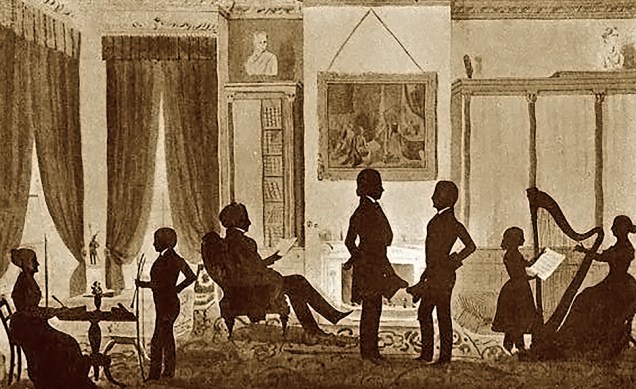
While of course Abbott Lawrence accomplished an enormous amount in business, and in civic life, and even international relations, he was also a husband and father. Here, as an assemblage of cut silhouettes, is a hint of his life at home, at No. 5 Park Street.

It is an image I enjoy immensely.


abbott-lawrence-family-sil-alt4

“The Family of Abbott Lawrence, In Their Library, 5 Park Street, Boston” by Auguste Amant Constant Fiddle Edouart, from Wax portraits and silhouettes, Massachusetts Society of the Colonial Dames of America, 1915

.

Continue reading

Memorial to Abbott Lawrence Appearing in the NEHGS Register

The following account, dating from 1866, represents the most succinct telling of the life of Abbott Lawrence that I could find. For a longer, but slightly more relaxed read, see H.A. Hill’s Memoir of Abbot Lawrence.


abbott-lawrence


________________________

NEW ENGLAND

HISTORICAL AND GENEALOGICAL REGISTER.

VOL. X.                     OCTOBER. 1866.                                NO. 4.

MEMOIR OF THE HONORABLE ABBOTT LAWRENCE, LL.D.

THERE is something far more instructive in the lives of men who have been practically useful than in those of warriors and theoretical philosophers. Abbott Lawrence belonged to the former class. It is a great mistake in young readers to suppose that biography has no interest unless its subject has led armies, or suffered incredible hardships in some service which could never have been of any benefit to the world. The cultivated mind will turn from these to those of men who have really been benefactors to their own race, and will find their interest to increase in their perusal, in proportion as that mind becomes susceptible of what is truly great and of lasting importance.

Continue reading