The Burgins Arrive NYC: May 3, 1864

In a period when the idea of immigration as a fundamental aspect of the American experience is on a lot of our minds, it was somewhat dumb luck that I happened across something we’ve been looking for for a long time: the (probable) record of the arrival of Jane Skudder Burgin and her children, via the steamship Cella, Edwin Billings master, in the port of New York from London, May 3, 1864.

These were the last/ most recent people in our family to leave their country, their friends their family, and most of their belongings, and come here.

(Off topic, but worth mentioning, it would take just eight years for Thomas Burgin to apply for and be granted his first patent.)

Looking at this list, I feel I was – almost – there to greet them.

And I suppose the larger point is worth making… Let’s continue to do everything we can to make the people coming today feel equally welcome and equally capable.

______


A transcription of the basic information is as follows:

Arrival Date: 3 May 1864

Family Ethnicity/ Nationality: British (English)

Place of Origin: Great Britain

Port of Departure: Le Havre, France and London, England

Destination: United States of America

Port of Arrival: New York, New York

Ship Name: Cella
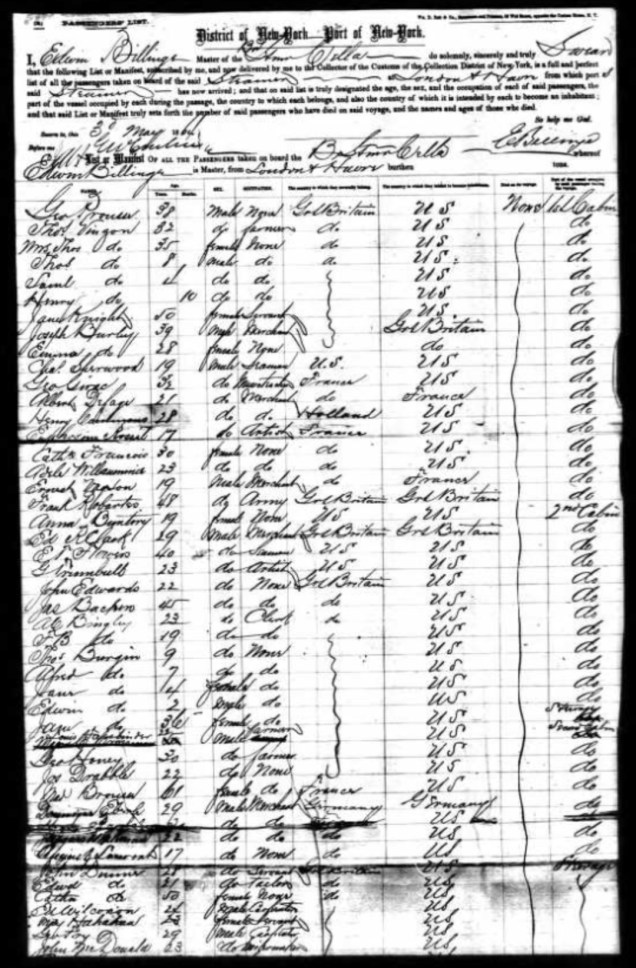
 

cella-passenger-list-whole-page

Continue reading

The Missing Ancestry of Thomas Burgin and Jane Skudder: What DO We Know?

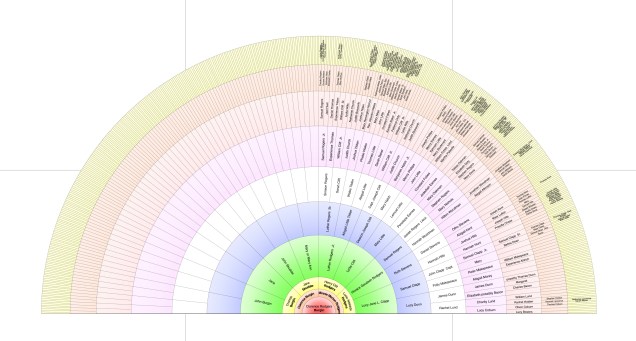
When I review our family tree in the form of a fan chart, there is one vast swath missing, a cone of “empty space,” expanding out from the center.

If I look, though, using the same format, with not me but my grandfather, Clarence Rodgers Burgin, at the center, the cone widens to consume fully half the page (see below). This glaring blankness reflects the mostly missing ancestry of my grandfather’s paternal grandparents, Thomas Burgin and Jane Skudder.

fan-chart-showing-burgin-info-shadow

The explanation runs this way. My grandfather’s father, whose name was Clarence Burgin, was the first person in his nuclear family to be born in America, and his parents, Thomas Burgin and Jane Skudder Burgin, were the last people in our extended family to be born overseas–In England.

Each generation of our family, on the right hand side of the fan chart, has put at least some time into either preserving or rediscovering knowledge of their forebears. I suspect that that happened because, as a practical issue, the information was stored locally and could be researched with some degree of ease. But the net result was a trail of breadcrumbs was created, and so the result is what you see.

In the case of the Burgin family, however, whose recent past was recorded in England not America, almost no investigation went on, and I think the reason why is straightforward: in the pre-internet era, it was hard to do. Really hard.

This post will be devoted to laying out what little we DO know about the Burgins… in the hope that it can serve as a foundation, a jumping-off point, for someone, whether a family member, or a paid researcher, or a combination of the two, to take up the challenge and find out who these people and their ancestors were.

.

Continue reading

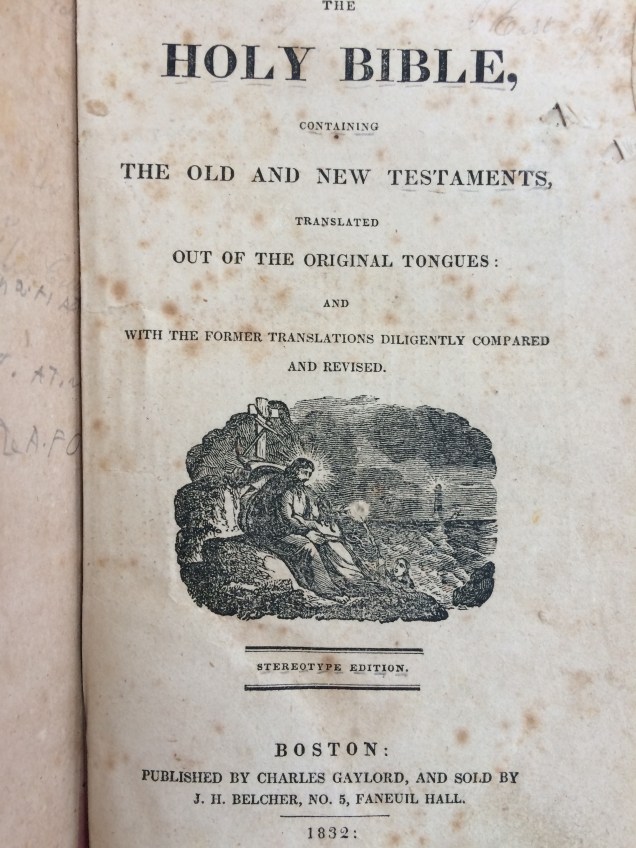
The Rodgers-Clift Family Bible, Found in an Online Auction

This was a recent eBay find. It’s the family bible documenting the early/ mid-19th century births in the Rodgers family.

Evidently after Uncle Tom’s (Thomas Skudder Burgin, brother of my grandfather, C. Rodgers Burgin) death, it was sold off, probably in a box of items, unrecognized for what it was. (Face palm.)

After leaving Massachusetts, it went to a Bible dealer in Indiana, and eventually to a re-seller in Odessa, Texas, who – following its purchase – sent it back to me.

As Paul Simon said, ‘Days of miracle and wonder.’

Home again.


img_0082

Continue reading

Martina Brandegee Lawrence’s ‘Early Affections’

During WWII, Martina Brandegee Lawrence took what Lee Albright called “a correspondence course,” and while there are no more specifics to offer, at least none that have survived, somehow this (typed!?) piece of writing was one of the results.

Part essay, part letter to a friend, part meditation, Martina writes here about some of the men she knew as a child who made a deep impression on her. I hesitate to characterize her feelings. Decide that for yourself. But there’s a sort of practical spirituality that emanates from her descriptions of these individuals. She doesn’t call them her teachers, per se, but it seems that each, in his separate way, showed her something about how to live…

______

martina-lawrence-early-affections_page_1

Continue reading

“Everybody’s June:” Martina Louise Brandegee Lawrence

There is a great phrase, “keeping a person’s memory green.” It’s basically an expression for the hopefully ongoing process of telling stories about a person who has died, talking about the things they believed in, using the funny expressions they liked, more or less just passing on a little of what made them them. Whatever may happen after we die, if people are keeping our memory green, some version of our spirit lives on.

I asked Lee Albright to compose a small piece about her mother, Martina Louise Brandegee Lawrence, because, in her everyday conversation and comments, Lee has devoted an enormous part of her life energy to keeping her mother’s memory green… She didn’t send me a finished piece of writing, but  rather a series of notes on slips of paper, stacked together.

The following is a compilation that I cobbled together from those notes. When I showed it to her, she said it didn’t sound like her voice, but to “leave it in.”

Take that as a caveat of sorts.


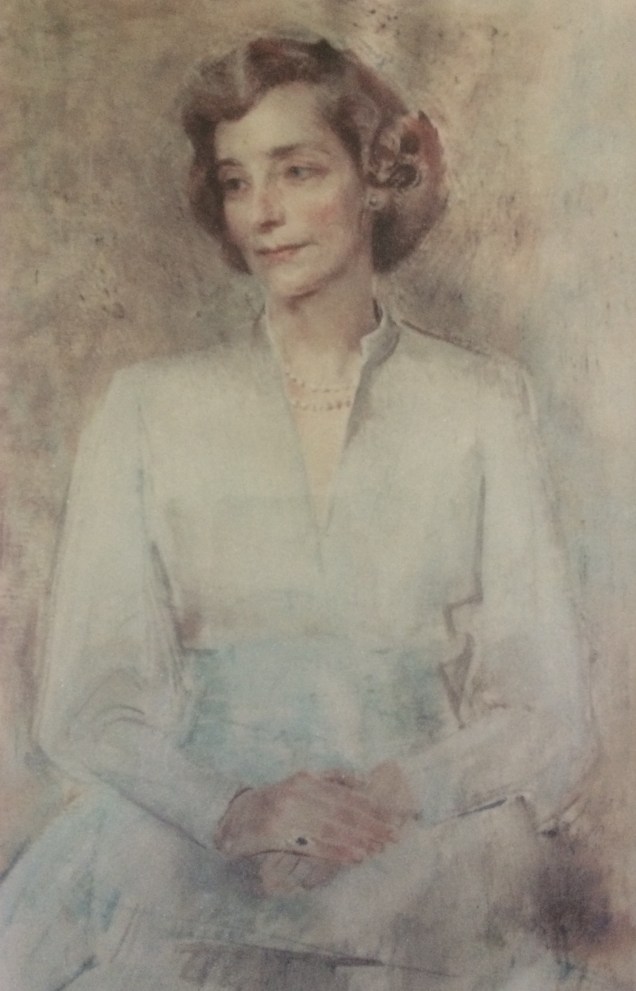
Martina Louise Brandegee Lawrence by G Cox

Martina Louise Brandegee Lawrence; oil on canvas; c. 1950s; by Gardner Cox


______________


Langdon, you asked me to put together some thoughts and memories of my mother and so I shall… reminding you that these thoughts are simply my experiences and remembrances and are perhaps different from those of my brothers or others who knew my mother well.

Continue reading

John Langdon Brandegee

John Langdon Brandegee, Martina Louise Brandegee Lawrence’s brother, died December 4, 1964, at the age of 56. He left no children, and a year and a half later, my father— rather than continuing the then-five generation tradition of first-born sons being named James Lawrence— gave me his uncle’s name, Langdon, instead. He wanted to ensure that the memory of the man would live on.

Langdon Brandegee was an enigmatic individual who I suspect was poorly understood by most of those around him, throughout his life. His sister was the exception to this; she probably understood him better than anyone. The two were very close.


John Langdon Brandegee (the girl in the pictures is his sister, Martina Louise Brandegee)


My father has described him as an unusually shrewd judge of character, which in turn led him to be distrustful of many, but also to hold enormous love and affection for a lucky few. I have heard some beautiful stories over the years of the goodness he could show people when he had decided they were “all right.”

His career of choice was finance, specifically the management of the large fortune left him and his sister, and he succeeded by almost any measure that could be applied. Under his canny eye, the money with which he had been entrusted was protected and indeed grew significantly.

I wish I could have had the chance to meet him, and talk a little. One of the things I would like to ask him is, if he had his life to live over again, would he choose a different career? Would he live where he lived, and do what he did, or would he make a break with the past and try something completely new?

He once told my father when they were talking about my father’s future life as a doctor, to get out of America, go to Africa, and practice bush medicine. That comment speaks volumes.

He died alone at his home in Jamaica Plain. I’ve wondered about the time leading up to his death. What had life become for him? What was he thinking? How did he depart this world? What had he learned, and where might his soul, if indeed any of us have souls, have traveled next?

There may be some clues to at least the first two of these questions in his will. In that document, he left one quarter of his considerable estate to the American Leprosy Foundation, three quarters to Deerfield Academy, honoring an old promise, and his furniture to his niece and nephews.


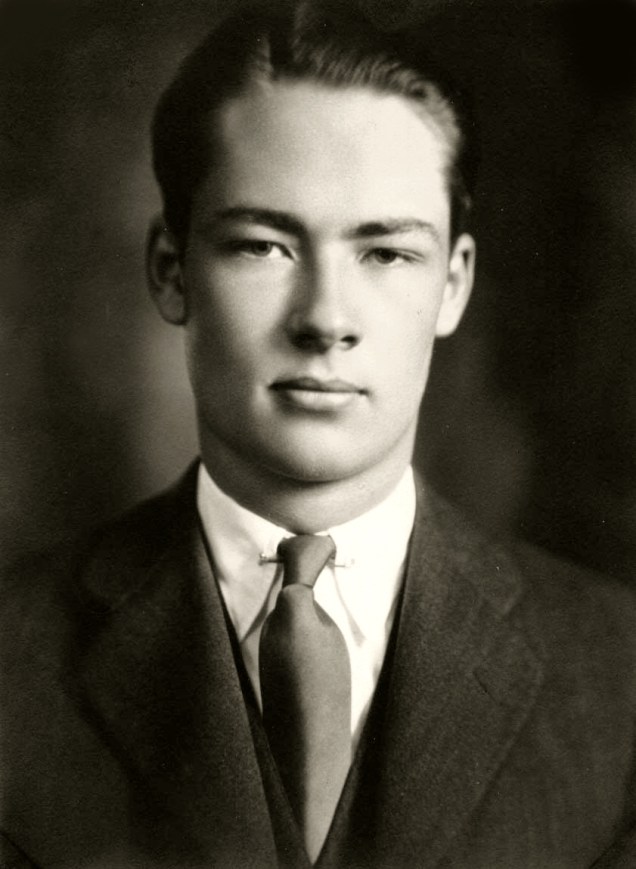
jlb-face-bnw

John Langdon Brandegee


Weld Grave Sites Around Boston

Eustis Street Burying Ground, Roxbury, MA aka “Eliot Burying Ground”

Joseph Weld is buried here. Along with many others of the early colon.

 “This is Roxbury’s earliest cemetery, established in 1630. The burying ground is named for Rev. John Eliot, Christian missionary to the native peoples of the Neponset. Eliot is buried in the Parish Tomb, along with other early ministers of the First Parish of Roxbury. Two colonial governors are interred in the Dudley family tomb, which dates from 1653. Members of the renowned clockmaking family, the Willards, were buried here in the 1840’s when Roxbury was a manufacturing center.”


Continue reading

William Fletcher Weld’s Empire

William Fletcher Weld was one of the true merchant princes of Boston’s golden age. In looking for material on him, I wasn’t able to find any of the funny stories, or strange coincidences that are usually out there, just accounts of how much money he made, which at his death was estimated to be between US$ 17 and 20 million.

His father, William Gordon Weld, who had fought pirates and captained his own ships, died with little if any money for his family. William Fletcher then set to work to make it back, first by working in a counting house, then buying waterfront real estate, and ultimately getting into the ship-building business, and the rest as they say…is history.

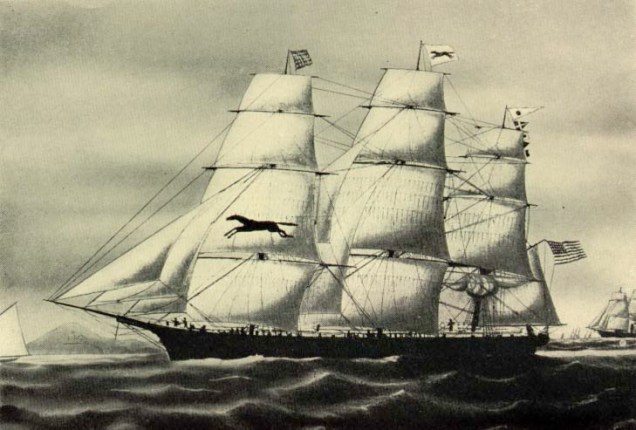
The following is a brief excerpt from Isabel Anderson’s book, Under the Black Horse Flag.

_____________

utbhf-fin

A Weld ship flying the black horse flag

THE FOUNDER OF THE FLEET


…The story of the William Fletcher Weld shipping trade is so full of incident and anecdote that it can best be prefaced by a summary of his larger accomplishments. Very early in his young manhood he bought wharf property and began ship‑building. In 1833 his firm built the largest ship of the day, the Senator, and from that time forward ship after ship was added to the list until his vessels became a fleet, and William F. Weld and Company were believed to be the largest firm of ship‑owners in America. At one time he controlled the markets for Manila and for Russian hemp. His own counting‑rooms were on 4~ Central Wharf. Eventually he took into the firm with him his two sons, William Gordon Weld and George Walker Weld. Richard Baker, Jr. was, I think, always his partner, and although they had disasters, William F. Weld continued the partnership, for he said that Baker could transact more business in a few hours than any one else could in a whole day.

Continue reading

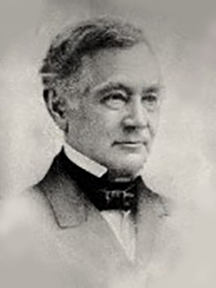
William Fletcher Weld

From the NEHGS Register… a copy of which was found in the barn in Brookline,  inscribed in pencil to Mrs. George L. Pratt, 1891.

___________


THE

HISTORICAL AND GENEALOGICAL

REGISTER.

 APRIL, 1891.

WILLIAM FLETCHER WELD

william-f-weld-rect

William Fletcher Weld

THE family of Weld dates back to 1352, William Weld, High Sheriff of London. The New-England branch came from Suffolk, the home of Governor Winthrop.

In 1632 Captain Joseph Weld, with his brother, the Reverend Thomas Weld, being “Puritans of the Puritans,” came to New England for freedom ; not penniless adventurers, with nothing to lose and everything to gain, but leaving behind home, comfort, pros­perity and assured position, for conscience’ sake.

Captain Joseph Weld settled in Roxbury, Mass., and became a freeman in the colony, which made him a grant of several hundred acres, now West Roxbury Park. This was the family home for nearly two hundred years.

Being well trained in arms, he was a valuable aid to Governor Winthrop in military affairs, and served in numerous fights with the Indians. His death was a great loss to the colony, and is mentioned by Winthrop. Savage stated that he was the richest man in the colony, at the time of his death, and was one of the first donors to Harvard College, of which his brother Thomas was of the first Board of Overseers.

William Fletcher Weld, the subject of this sketch, the sixth generation from Captain Joseph Weld aforesaid, was born in the old homestead, April 15th, 1800. His grandfather, Eleazer Weld, was a Judge, and also Colonel in the Revolutionary War, and Paymas­ter of Washington’s army at Cambridge, in 1777 and 1778.

Continue reading

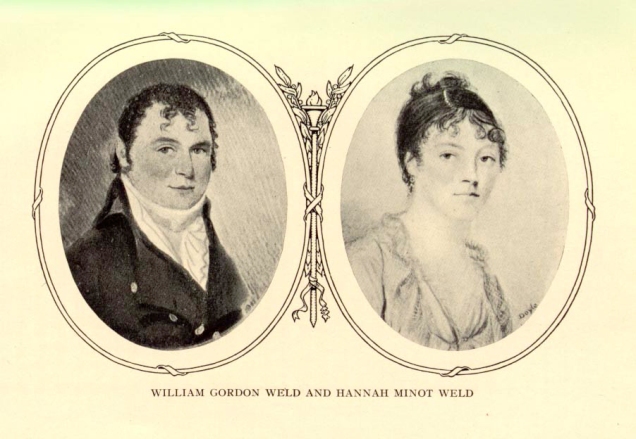
Capt. William Gordon Weld: Excerpts From “A Family Letter”

The following, by W. Rodman Peabody, was taken from Frances Weeks Lawrence’s manuscript, and was originally published in the Bulletin of the Society for the Preservation of New England Antiquities.

______________

william-gordon-weld-conv1

In common with so many other New Englanders, the Welds heard the call of the sea ringing loudly and persistently in their ears. By 1802 at least one member of the family was trading with Europe, in command of his own square-rigged ships. In 1802, William Gordon Weld, while in command of his armed ship “Jason” off Tunis, fought and beat off an Algerian ship, one of the terrors of the sea, and recaptured two American brigs with their crews. In 1812, his ship “Mary” was lying in the river at Lisbon. He had discharged his cargo of dried fish and barrel staves and was waiting for his factor to collect his return cargo. Nearby the English frigate “Spartan” swung at her anchor. He [Weld] was of companionable character and like all other Welds since his time regarded a good cook as one of the necessities of life. It was a natural result, therefore, that Mr. Weld and the captain of the “Spartan” formed the habit of dining with each other on alternate evenings. Eventually, the “Spartan” received orders to sail for England, and dropped down the river on an ebbing tide. Shortly afterwards, Mr. Weld, despairing of obtaining a profitable cargo, determined to return to Boston in ballast with the proceeds of his outward voyage converted into doubloons, which were packed into kegs.

Continue reading